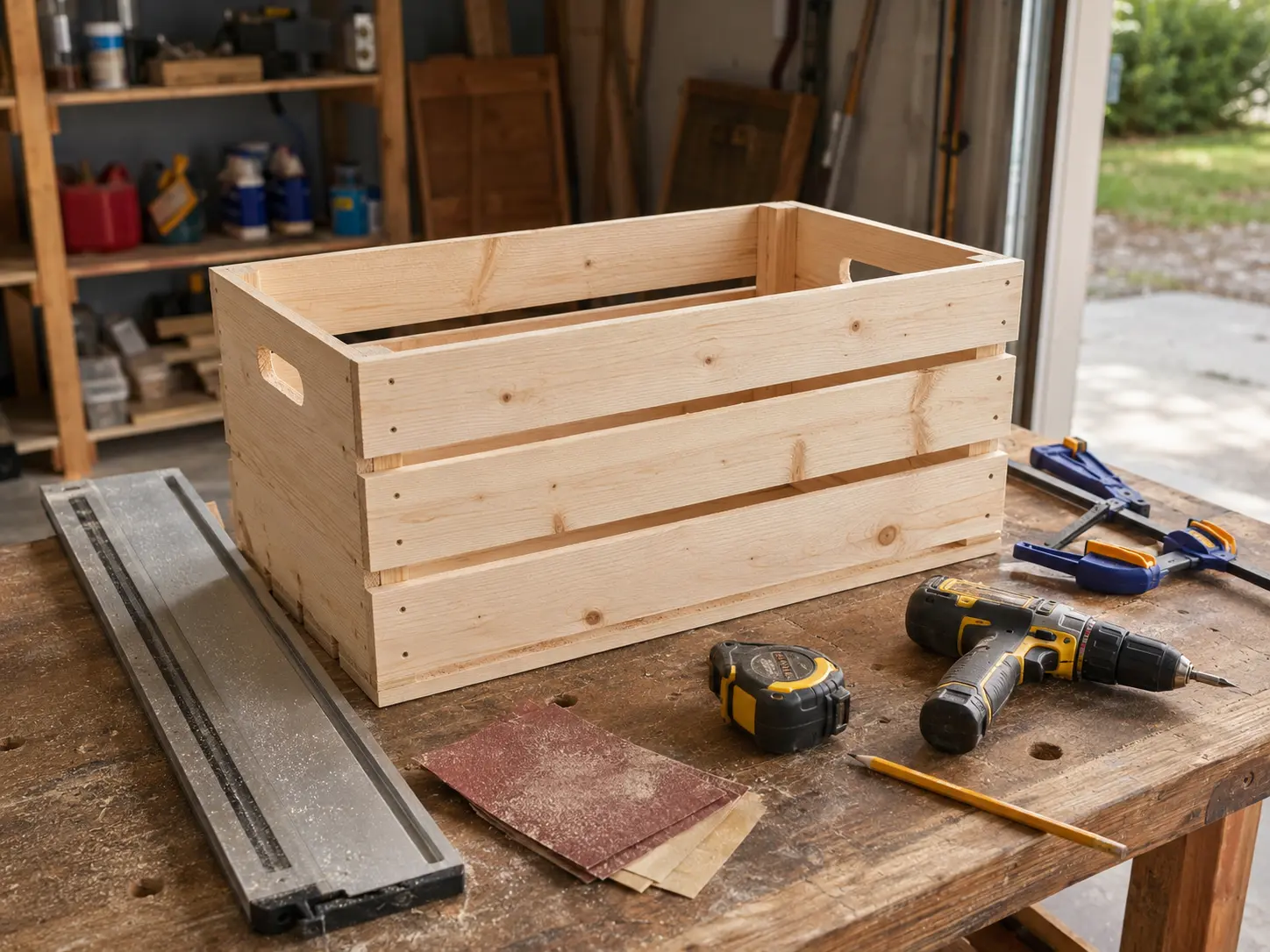
Free vs Paid Woodworking Plans: Are Paid Plans Worth It?
Paid woodworking plans can be worth it when they remove enough uncertainty to save you time, material or avoidable mistakes. A useful paid plan should provide clear dimensions, a complete material and cut list, realistic tool requirements, understandable drawings, an ordered build sequence and some way to resolve errors or questions.
Free plans can provide all of that too. Price is not proof of quality, and a package containing thousands of plans is not automatically more valuable than one well-documented plan for the project you actually intend to build.
A paid plan is worth buying when its price is lower than the cost of the uncertainty it removes.
Free versus paid plans at a glance
| Question | Free plan | Paid plan |
|---|---|---|
| Can it be complete and accurate? | Yes | Yes |
| Can it be incomplete or unsuitable? | Yes | Yes |
| Is a cut list guaranteed? | No | No |
| Is support included? | Rarely | Only when stated |
| Are corrections and updates included? | Not necessarily | Only when stated |
| Does price prove quality? | — | No |
| Does a large collection prove value? | No | No |
| Should you inspect the tool list first? | Yes | Yes |
| Should you verify the author and source? | Yes | Yes |
Do not decide by price alone. Compare the project, documentation, tools, source and terms.
What are you actually paying for?
A plan is not valuable because it arrives as a polished PDF. It is valuable when the documentation reduces decisions that would otherwise fall on the builder.
You may be paying for:
- design work;
- dimensioned drawings;
- a material list;
- a cut list;
- hardware and fastener specifications;
- an efficient build order;
- photos, diagrams or video support;
- templates;
- alternative sizes;
- tool-specific instructions;
- revisions after an error is found;
- help from the author or seller;
- a license that explains permitted use.
Not every paid plan includes all of these. “Premium” is a marketing label until the preview and terms show what is actually delivered.
Information has to match your project
A detailed plan for a table saw, router table and planer may be excellent and still be useless to a beginner with a circular saw and drill.
The plan should reduce your uncertainty:
- Will it fit the intended room?
- Can you transport and handle the material?
- Do you own or have access to the required tools?
- Does the joinery match your current ability?
- Does the plan explain the steps you do not already know?
Documentation that assumes a different shop is not automatically bad. It is a poor fit.
When a free woodworking plan is enough
A free plan can be a good choice when:
- the project is small and mechanically simple;
- finished dimensions are shown;
- all materials and hardware are identified;
- the tool list is complete;
- the cut list can be checked against the drawings;
- photographs or diagrams clarify the assembly;
- the author or publication is identifiable;
- corrections can be found in comments or revision notes;
- you already understand the missing minor details.
Free plans are often supported by advertising, sponsorship, tool sales, email subscriptions or a creator’s broader business. Free to the reader does not mean no work went into the plan.
A free plan does not need to be perfect to be useful
An experienced builder may need only a dimensioned drawing and a few joinery notes. A complete beginner may need every part named, every operation sequenced and each hidden tool disclosed.
Evaluate the plan relative to the reader, not an imaginary universal standard.
When “free” becomes expensive
A free plan stops being a saving when it causes:
- an unnecessary tool purchase;
- material cut to an incorrect or ambiguous dimension;
- hardware ordered in the wrong size;
- assembly in an order that blocks the next step;
- a project that does not fit its location;
- substantial time spent reconstructing missing information.
The download price is only one component of project cost.
When a paid woodworking plan may be worth it
Paying becomes easier to justify when the project is expensive, complex or difficult to reverse-engineer.
Consider a paid plan when:
- the lumber or hardware costs much more than the plan;
- the project has many unique parts;
- small dimensional errors would create expensive waste;
- the joinery sequence is unfamiliar;
- the design includes templates or several coordinated drawings;
- the plan has a useful sample or preview;
- the author demonstrates knowledge of the project;
- real builders show completed versions and discuss the process;
- updates and corrections are available;
- support is clearly included;
- the seller’s refund and access terms are understandable.
A $15 plan that prevents one $40 material error may provide practical value. That is an example of the decision logic, not a claim that the plan is accurate or that the error would definitely occur.
Pay for the next project, not a future identity
Beginners sometimes buy large libraries because the purchase feels like becoming a woodworker. But access to hundreds of designs does not produce time, space, tools or completed projects.
Buy documentation for a project you can realistically start—not for a workshop you hope to own someday.
What every woodworking plan should include
The amount of detail can vary with project complexity, but a beginner-oriented plan should address the categories below.
1. Project definition
- clear finished dimensions;
- intended use;
- suitable location or exposure;
- limitations related to mounting, load or environment where relevant.
2. Material list
- lumber or panel type;
- actual and nominal dimensions where needed;
- quantities and purchase lengths;
- hardware;
- fasteners;
- adhesives and finish when required.
3. Tool list
- required tools;
- required accessories, blades and bits;
- optional tools clearly labeled as optional;
- practical alternatives when the plan offers them.
4. Cut list
- part name;
- quantity;
- final dimensions;
- material or thickness;
- orientation or special notes where needed.
A cut list is not self-validating. Popular Woodworking notes that final part dimensions can depend on actual material thickness and earlier parts. Check the cut list against the drawings and real material rather than treating each number as independent.
5. Drawings and visuals
- overall views;
- dimensions attached to the correct part;
- exploded or sectional views when they clarify hidden relationships;
- orientation of parts;
- hardware placement;
- templates at a declared scale when included.
6. Build sequence
- preparation before assembly;
- operation order;
- subassemblies;
- dry fitting when appropriate;
- clamping and fastening access;
- sanding or finishing steps that must happen before parts become inaccessible;
- final installation when part of the project.
7. Revision and support information
- version or update date;
- correction history when relevant;
- seller or author contact method;
- explanation of what support covers.
The next article in this series examines these requirements in detail: What Should a Good Woodworking Plan Include?.
How to evaluate a plan preview before buying
Do not rely only on the sales-page photograph. The preview should reveal how the plan communicates.
Look for:
- a sample drawing at readable size;
- a partial material or cut list;
- the full required-tool list;
- finished dimensions;
- page count or deliverable description;
- file type;
- whether video access is included or sold separately;
- whether dimensions are imperial, metric or both;
- date of the current version;
- access and download terms;
- support and refund policies.
What a weak preview may indicate
Be cautious when the seller shows many finished-project photographs but no actual plan page. A preview that hides every dimension, drawing and instruction style prevents the buyer from evaluating the product’s central function.
Protecting a design from unrestricted copying does not require hiding whether the document is legible, structured and compatible with the buyer’s tools.
Check the finished dimensions first
The project may look compact because of the photograph’s perspective. Confirm width, height and depth before evaluating anything else.
For furniture, measure the intended location and path into the room. For shop furniture, include operating clearance—not only the finished footprint.
The hidden cost of a bad woodworking plan
The purchase price may be the smallest loss.
Material waste
An incorrect cut list or missing dependency can consume replacement lumber, sheet goods or hardware.
Tool surprises
A sales page may say “basic tools,” while the instructions rely on a pocket-hole jig, router bit, dado blade, drill press or several large clamps.
Assembly dead ends
If the sequence is incomplete, one installed part may block access to a later fastener, clamp or sanding surface.
Dimensional mismatch
Nominal lumber names and actual measured sizes are not interchangeable. A design that ignores the material available to the buyer may not assemble as shown.
Time spent interpreting
A confusing plan can turn the builder into the plan’s unpaid editor. Some adaptation is normal in woodworking; reconstructing every missing decision is not beginner guidance.
Unsafe improvisation
The most serious cost appears when missing instructions encourage unsupported cutting, unverified mounting or guessed structural capacity.
A plan does not replace the current manual for a tool, product instructions, local code or qualified professional judgment.
Individual plan versus large bundle
For a beginner, one relevant plan is usually easier to evaluate than a huge collection.
| Question | Individual plan | Large bundle |
|---|---|---|
| Can you inspect the exact project? | Often | Sometimes difficult |
| Is authorship easy to identify? | More likely | May vary across files |
| Is formatting consistent? | More likely | Must be verified |
| Is support project-specific? | Sometimes | Often unclear |
| Is the next project obvious? | Yes | Choice can become noise |
| Does quantity guarantee quality? | Not applicable | No |
Quantity is not the same as coverage
Ten thousand files can contain:
- duplicates;
- minor variations;
- outdated documents;
- projects that require unavailable tools;
- scans that are difficult to read;
- plans without searchable titles;
- content unrelated to the buyer’s skill level;
- designs with unclear origin.
The useful number is not how many plans exist. It is how many suitable, understandable and properly sourced plans you can realistically build.
Search and organization are part of the product
A digital library needs:
- accurate titles;
- categories;
- tool and skill filters;
- dimensions;
- preview images;
- searchable files;
- consistent naming;
- version control;
- a way to find corrections.
A giant unindexed folder transfers the cataloging problem to the buyer.
Plan bundles: warning signs
No single sign proves that a product is poor. Several together should stop the purchase until the seller provides better evidence.
The plan count is the main sales argument
The seller emphasizes thousands of plans but provides few complete samples.
The samples look unrelated
Drawing styles, fonts, page quality and terminology change dramatically without explaining multiple authors or licensed sources.
Authorship is unclear
The seller does not identify who created the plans or how the content was obtained.
The catalog cannot be inspected
There is no meaningful index, project list, filter or search demonstration.
Tool requirements are absent
The buyer cannot determine how much of the package matches a small beginner shop.
Urgency replaces evidence
Countdowns, expiring bonuses and exaggerated scarcity receive more space than plan previews and terms.
Bonuses inflate the offer
Unrelated files, guides or software are presented as value without explaining their quality or relevance.
The guarantee substitutes for product quality
A refund promise is useful only when the policy is clear and the seller honors it. It does not make an incomplete plan complete.
Check support, updates, refunds and access
Digital products have practical terms that buyers often ignore until something fails.
Support
Before buying, determine:
- who answers questions;
- whether support covers plan errors or only download problems;
- which contact method is used;
- whether any response timeframe is stated;
- whether community comments are being presented as official support.
Updates
Ask whether a corrected plan replaces the original download and whether previous buyers receive the new version.
A document without a version or update date makes it harder to know whether a reported error has been corrected.
Refunds
Read the seller’s policy before paying. The US Federal Trade Commission advises online shoppers to check refund and return policies and understand the terms of the sale. Digital downloads may have conditions that differ from physical products.
Check:
- refund period;
- exclusions for downloaded or accessed files;
- request process;
- payment method;
- recurring billing or subscription terms;
- seller identity and contact information.
Do not assume a general “money-back guarantee” overrides detailed exclusions elsewhere on the site.
Access and ownership
Determine whether the purchase provides:
- a file you can download;
- access through an account;
- a subscription that ends when canceled;
- streaming video access;
- a limited license rather than ownership of the content.
The FTC has warned that buyers of digital items may receive a license to access content rather than permanent control of a file. Save the terms and receipt that apply at the time of purchase.
Copyright and source transparency
Woodworking ideas and functional methods are not the same as the drawings, writing, photographs and document design used to express them.
The US Copyright Office explains that copyright can protect original works such as books and drawings, while ideas, systems and methods themselves are not protected in the same way. The precise legal status of a particular plan depends on the work and circumstances.
As a buyer, you do not need to conduct a legal investigation before every download. You should still look for basic provenance:
- named author, designer or publisher;
- copyright or license information;
- consistent source branding;
- explanation when a bundle contains multiple creators;
- permission for any commercial use the seller claims to allow.
Be cautious when a seller appears to aggregate unrelated plans without identifying their sources or rights.
Buying a file does not automatically grant the right to redistribute the plan, publish its pages or resell copies. Read the license.
Reviews: look for build evidence
Star ratings alone do not show whether the plan works.
Useful reviews describe:
- the exact project built;
- the reviewer’s skill level;
- tools and material used;
- where dimensions or instructions were clear;
- errors or adaptations encountered;
- whether the author corrected a problem;
- photographs of the completed build when credible.
Be cautious with reviews that repeat sales language, discuss only delivery or never identify a project.
Also look for disclosures. The FTC’s Endorsement Guides reflect the principle that endorsements should be honest and not misleading, and that material relationships should be disclosed. An affiliate may still provide useful analysis, but the financial connection matters when weighing the recommendation.
The Plan Value Test
Use this ten-question screen before paying.
Score one point for each clear “yes.”
| Criterion | Question | Score |
|---|---|---|
| Outcome | Are finished dimensions and intended use clear? | 0 or 1 |
| Materials | Are lumber, hardware, fasteners and quantities identified? | 0 or 1 |
| Cut list | Are parts named, counted and dimensioned? | 0 or 1 |
| Tools | Are required and optional tools separated? | 0 or 1 |
| Sequence | Is the build order understandable from the preview or description? | 0 or 1 |
| Visuals | Do sample drawings clarify orientation and assembly? | 0 or 1 |
| Assumptions | Are material sizes, units and key dependencies explained? | 0 or 1 |
| Support | Is a real support method identified? | 0 or 1 |
| Updates and terms | Are version, access and refund terms understandable? | 0 or 1 |
| Provenance | Is the author, publisher or legitimate source identifiable? | 0 or 1 |
How to interpret the score
| Score | Practical interpretation |
|---|---|
| 8–10 | The plan may justify purchase if it also fits your tools and project. |
| 5–7 | Important uncertainty remains; buy only after resolving the gaps. |
| 0–4 | Do not buy based on the current evidence. |
This is a consumer decision tool, not technical certification. A high score does not prove the dimensions are correct, the structure is safe or the project complies with local requirements.
Add the fit test
Even a ten-point plan should fail your purchase decision if:
- you cannot perform a required operation;
- the project does not fit the intended location;
- the material is unavailable or impractical to handle;
- the plan assumes a shop you do not have;
- the intended use requires engineering or installation information the plan does not provide.
A ten-minute pre-purchase check
Before entering payment details:
- Confirm the finished dimensions.
- Read the complete tool list.
- Inspect at least one actual plan page.
- Check whether a cut list and material list are included.
- Identify the author or publisher.
- Search for corrections and independent build reports.
- Read access, license and refund terms.
- Confirm whether the purchase is one-time or recurring.
- Apply the Plan Value Test.
- Ask whether this is the next project you will realistically build.
If the sales page prevents several of these checks, the uncertainty belongs in the purchase decision.
Bottom line
Paid woodworking plans can be worth it. Free plans can be excellent. Neither price nor file count guarantees quality.
Pay when the plan provides relevant dimensions, materials, cuts, tools, drawings, sequence, support and source transparency—and when those details reduce more uncertainty than the plan costs.
Avoid buying a huge library merely because the number sounds impressive. A beginner does not need thousands of unidentified options. You need one understandable, suitable plan for the next project.
Frequently asked questions
Are paid woodworking plans better than free plans?
Not automatically. Paid plans may provide better documentation, support or revisions, but those features must be verified. A complete free plan from a credible source may be more useful than a poorly documented paid plan.
How much should I pay for a woodworking plan?
There is no universal correct price. Compare the plan price with project complexity, material cost, included documentation, support and the uncertainty it removes. Do not evaluate value by page count alone.
Are large woodworking-plan bundles worth it?
Usually only when the catalog is inspectable, searchable, consistently documented, properly sourced and relevant to your tools. A large file count without previews, authorship and organization is not evidence of value.
What is the most important part of a woodworking plan?
No single component is enough. Finished dimensions, material list, cut list, tool requirements, drawings and build sequence must agree with one another.
Can I trust customer reviews of a plan?
Give more weight to reviews that identify the project, describe the build and discuss specific strengths or errors. Check whether reviewers or publishers disclose affiliate, sponsorship or other material relationships.
What should I do if a purchased plan has an error?
Stop before cutting additional material. Check for a newer version or correction notice, document the conflict and contact the seller or author. Follow the stated refund or support process when the issue cannot be resolved.
Research method and sources
This article was researched on August 22, 2026. We reviewed current discussions about buying woodworking plans, free-plan sources, plan previews and large-bundle marketing. The editorial framework focuses on document quality and buyer fit rather than assuming free or paid is inherently superior.
Technical context includes Popular Woodworking’s explanation of cut-list dependencies and Woodcraft’s guide to relative dimensioning and cut lists. Consumer questions were also compared with current discussions from beginner woodworkers.
Consumer and rights references include the Federal Trade Commission’s guidance on online shopping and refund policies, digital-item access and licensing, and endorsements and material relationships, plus the US Copyright Office’s copyright overview.
No plan seller supplied or reviewed this article. The Practical Woodshop did not purchase, build from or test a specific paid plan for this guide. The Plan Value Test is an editorial screening tool, not a structural, legal or quality certification. This article contains no affiliate links.